Audio attribution resolved across one network.
Wav Linq is building the network standard that connects creation directly to attribution; making ownership resolvable anywhere across the network.
One identity that connects the network.
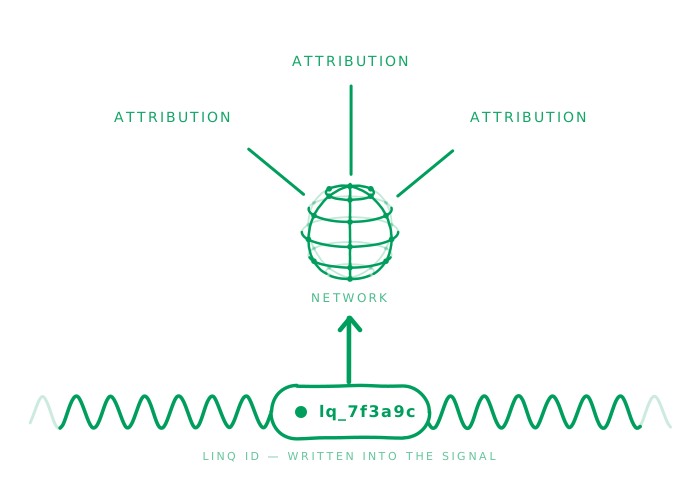
When a track is embedded, it receives a unique Linq ID — written into the audio signal itself, not bolted onto file metadata. That single ID is how creators, platforms, and distributors achieve persistent attribution as audio moves across the network.
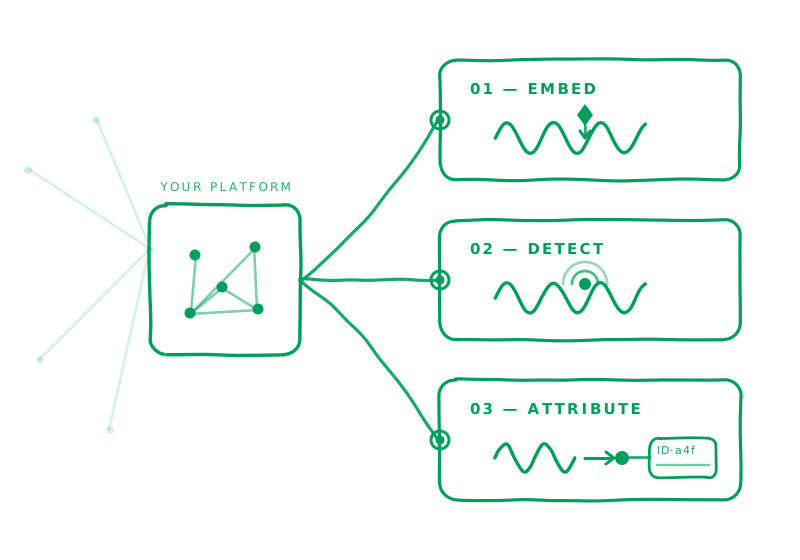
Embed
A creator uploads a track or a platform embeds a catalog. Each file gets its own Linq ID, anchored in the audio.
Travel
The track leaves your hands — shared, re-uploaded, compressed. Metadata strips away; the Linq ID rides inside the signal.
Detect
Any connected platform can scan inbound audio and recover the Linq ID, even from a re-encoded copy.
Resolve
The network looks up the ID and returns attribution — creator, track, and source — from the registry or your own resolver.
Built for integration.
A drop-in RESTful API allows distributors, labels, and platforms to act as network nodes, encoding and resolving attribution natively within their existing workflows.
Partner API — full reference, auth patterns, and integration examples in the API docs. Check API status before going live.
job_id, poll until succeeded. Rate-limited, idempotency-keyed, and auth-gated in production. See reliability & operations for failure handling.
Metadata breaks, your Linq won't.
Linq your tracks — the network does the rest.
Ready to start?
Free for creators · Partner API for platforms